What to wear in Narvik
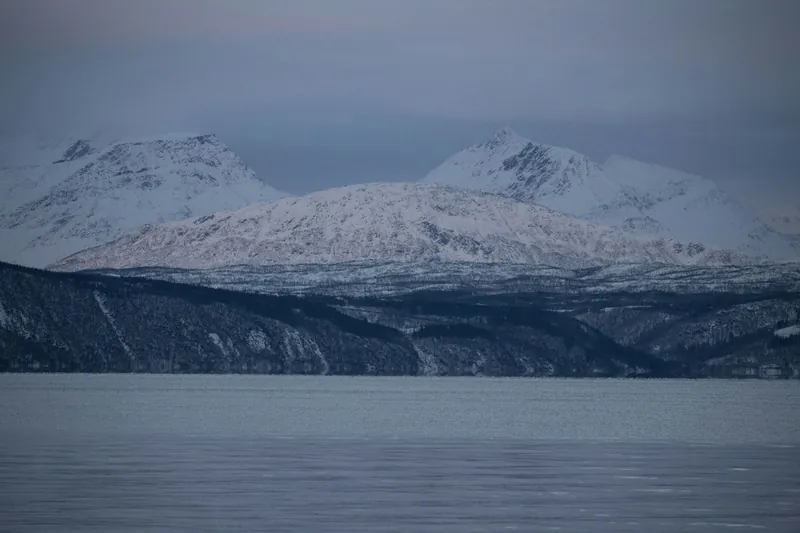
Winters by the fjord hover a few degrees below zero, the mountains and the Swedish border are colder, and the air is often damp. Several tours expect you to bring your own warm clothes.
Winter days by the Ofotfjord often hover around freezing, with wet snow or rain as often as dry cold. Up in the mountains and towards the Swedish border, where some aurora tours drive to find clear skies, it is colder. Dress for both, and for long spells of standing still outside.
What the numbers say
We found no long-term averages for the town itself. The nearest station with them is Evenes airport, 57 km away by road. There, January averages about −3.5 °C and February about −3.9 °C in the 1991 to 2020 figures, November about 0 °C and April just under 2 °C. Single cold spells go much lower: in 2025 Evenes measured −19.4 °C on 23 November, and central Narvik −12 °C on 22 January.
Precipitation is the other factor. In the older long-term figures for Evenes, October is the wettest month, followed by December, with January, November and September close behind. A station in Ballangen, south-west of Narvik, records more than 100 mm in every month from September to March. Near zero degrees, that means slush and rain as often as dry powder.
Layers for a winter day
A system of layers works better than one thick coat, because you move between heated cars, buildings and long stretches standing still outside.
- Base layer of wool or synthetic fabric, top and bottom.
- A fleece or wool sweater as the middle layer.
- An insulated, windproof jacket and trousers, waterproof if possible.
- Warm winter boots with a good grip for icy streets.
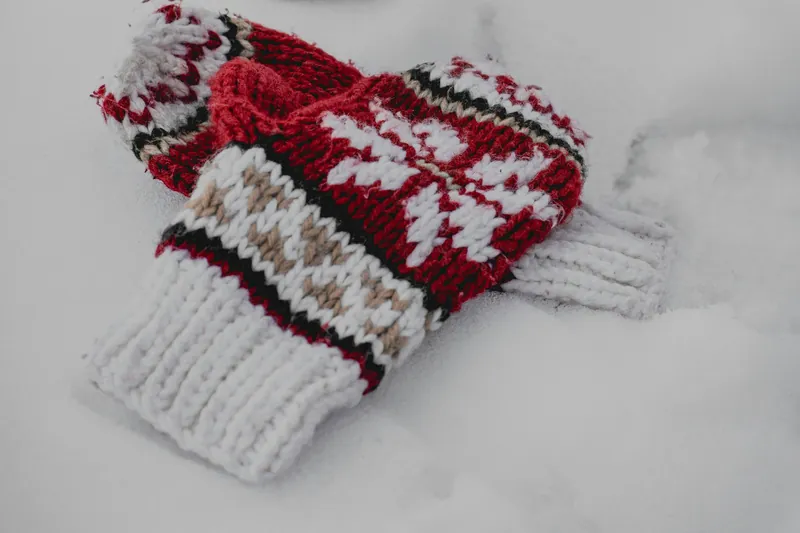
- Hat, scarf or neck gaiter, and mittens, with thin gloves underneath for using a camera.
- Wool socks, and a spare pair for long evenings outside.
Visit Narvik also suggests ice grips for your shoes, because roads, pavements and car parks can be slippery in winter. Wind makes any temperature feel colder. Strong wind has also been enough to cancel the gondola ride on the guided town tour, according to one review, so a windproof shell is worth more than an extra sweater.
What tours provide
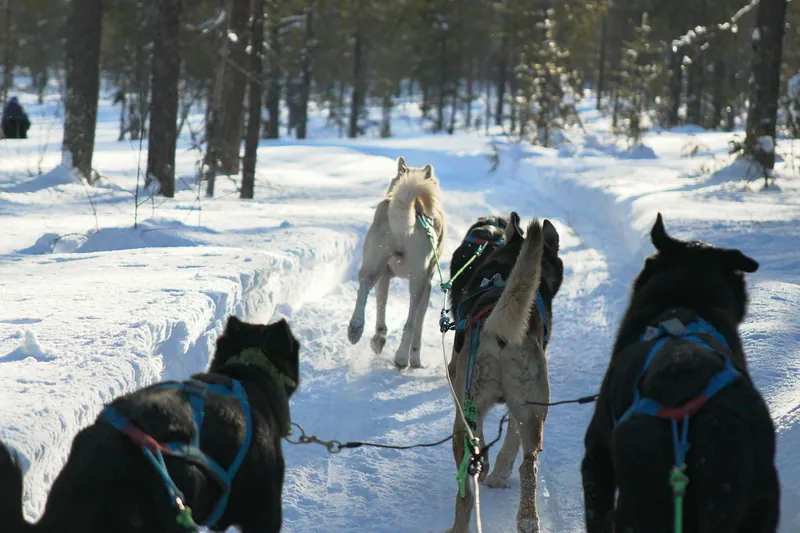
Read the inclusions before you pack, because they differ a lot. Husky Isogaisa asks you to bring warm winter clothes, boots, a hat and mittens. Reviewers mention extra outer jackets at the farm, and the tour description adds that you must be able to run in the snow. The sledding tour with a Sámi ceremony also lists winter clothing as not included.
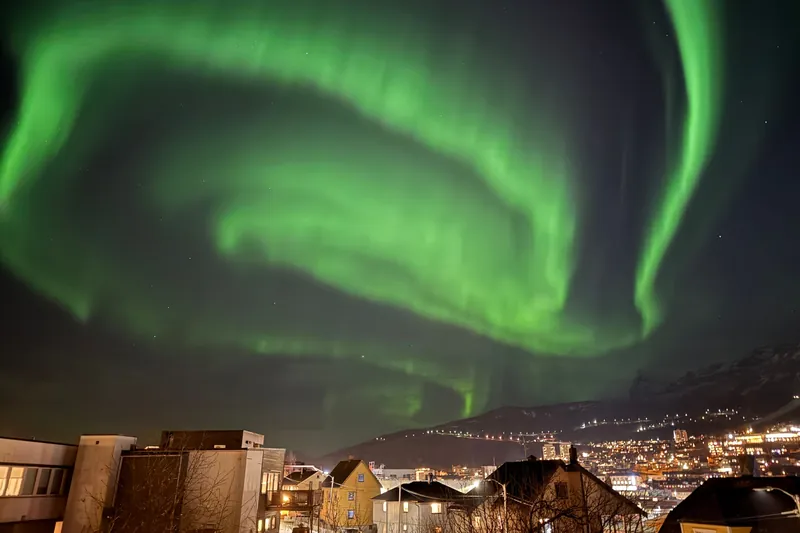
The evening aurora tours from town, with the photographer guides of Arctic Moments or by minibus with Arctic Loop, do not supply winter clothing or footwear either. The minibus tour lends headlamps with a red-light setting. The private aurora drive may cross into Sweden, so bring a passport or ID card. See the northern lights page for the tours.
A few activities include the outer layer. The first-time snowmobile ride in Bardu provides warm outerwear, boots and mittens, but not the wool or fleece underwear beneath. Arctic Floating in Narvik harbour puts you in a survival suit, and thermal underwear underneath is recommended.
Trains, gondola and the mountains
Not every winter activity is spent outdoors, but most include cold moments. On the Arctic Train to Bjørnfjell, reviewers mention stops of about ten minutes at small stations where you can get out. Keep your jacket, hat and gloves with you rather than in a bag. From January 2027 the new gondola takes you to 656 metres in eight minutes, and wind at the top can be strong enough to stop the gondola. Skiers who plan to leave the groomed runs should know that the off-piste terrain there reaches 1,154 metres of vertical.
Light, darkness and small things
From early December to early January the sun does not rise, and even in November and February the days are short. A reflector on your jacket or bag helps drivers see you on unlit roads. Norway uses 230 volts with type C and F plugs, the same two round pins as most of continental Europe.
Summer
From late May to July the sun stays up all night, and temperatures vary a lot. July averages about 13 °C at Evenes, while central Narvik reached 28.9 °C on 1 August 2025. Pack layers, a rain jacket and something warm for the evening. On the summer puffin boat from the Harstad area the boat is open and you sit outside; warm suits are available on request. More on the seasons is on our best time to visit page.
Questions travellers ask
How cold does it get in Narvik in winter?
At Evenes airport, the nearest station with long-term averages, January and February average about −3.5 to −4 °C. In 2025 the lowest reading in central Narvik was −12 °C, and Evenes dropped to −19.4 °C in November. The mountains are colder than the shore.
Do husky tours provide warm clothing?
Husky Isogaisa asks you to bring warm winter clothes, boots, a hat and mittens. Reviewers mention that extra outer jackets are available on site, but plan on your own layers underneath.
What should I wear on an aurora tour?
The evening aurora tours in Narvik do not provide winter clothing or boots. You spend time standing outside at night, so wear thermal layers, an insulated jacket, a hat, mittens and warm winter footwear.
Do I need waterproof clothing?
Yes, at least a waterproof outer layer. Narvik gets a lot of rain and snow from autumn into winter, and temperatures near zero often mean wet snow or rain by the fjord.
What should I pack for summer in Narvik?
Layers and a rain jacket. July averages about 13 °C at Evenes, but central Narvik reached almost 29 °C on 1 August 2025. On the open puffin boats you sit outside the whole trip.
Where these facts come from
Dates, opening hours and rules change. We checked these pages in October 2026; the official source has the final word.